Category: Power, Systems & Colonial Structures
What does it mean to be told that your history has no price tag?
What does it mean when the very architects of modern "civilization" look at the largest crime in human history and simply say, "No"?
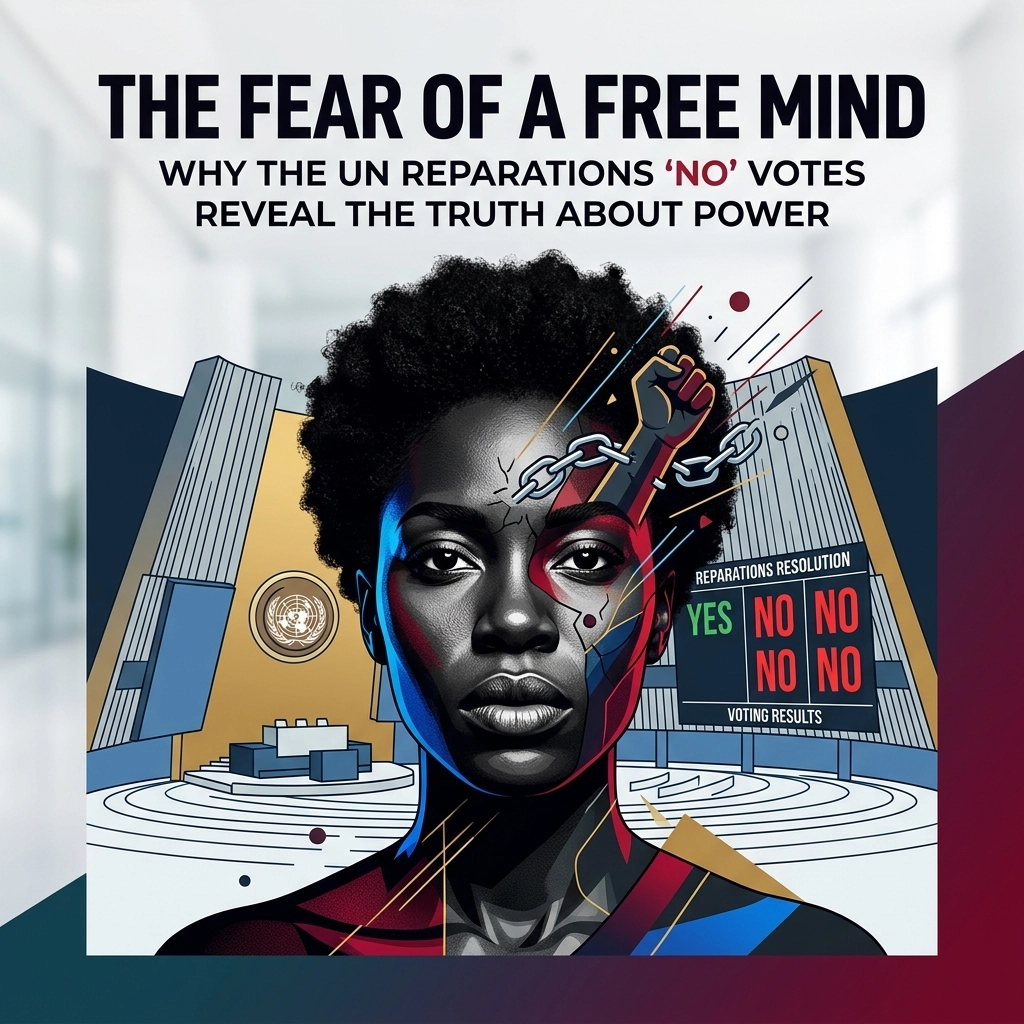
Recently, the United Nations held a vote on a resolution for slavery reparations.
The tally was telling: 123 countries said "Yes."
The United States, Israel, and Argentina said "No."
The entirety of the European Union chose to sit in the silence of abstention.
They claim it is a matter of legal technicalities.
They claim it is about "retroactive liabilities."
They are lying.
They aren't afraid of the trillions of dollars.
They are afraid of the truth.
They are afraid of what happens when the "stolen goods" are finally identified as such.
They are afraid of a free mind.

The Anatomy of the 'No'
The official excuse from Washington is that they do not recognize a legal right to reparations for things that weren't "illegal" at the time they happened.
Think about that logic for a second.
It is a logic that attempts to sanctify barbarism through the passage of time.
It is a logic that suggests that if you write a law that says it is legal to kidnap, brand, and exploit a human being, then no crime has been committed.
This is the ultimate gaslighting.
The "No" votes from the U.S., Israel, and Argentina are not just policy positions.
They are the desperate gasps of a collapsing narrative.
If these nations admit that reparations are owed, they admit that their current wealth is not the result of "innovation" or "democracy."
They admit that their towers and their treasuries are built on a foundation of theft.
They admit that their "civilization" was actually built on systematic barbarism.
To pay is to confess.
And the colonizer is not yet ready to enter the confessional.
The EU’s Silent Complicity
The European Union’s abstention is, in many ways, more insulting than a "No."
It is the act of a bystander watching a robbery and claiming they didn’t see enough to get involved.
By abstaining, Europe attempts to maintain its mask of moral superiority while keeping its hands firmly on the loot.
They speak of human rights in the present while refusing to account for the human wrongs that funded their museums and their social safety nets.
This is the internal landscape of the colonial mind, a mind that is fractured.
It is a mind that wants the fruit of the labor without acknowledging the blood on the soil.
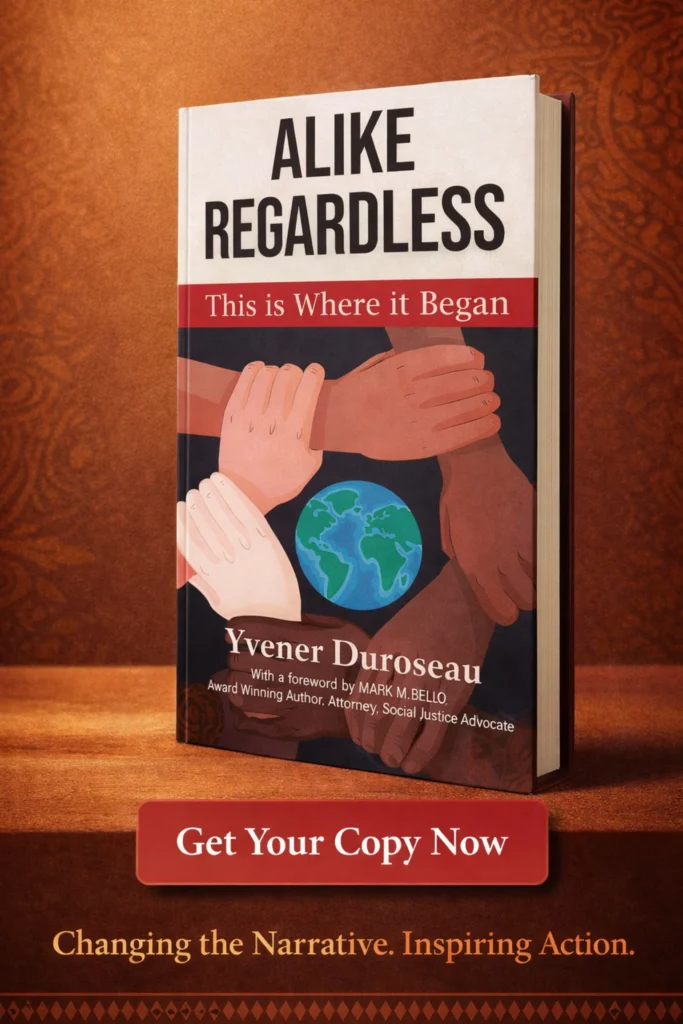
In Alike Regardless: This Is Where It Began, the exploration of human unity is grounded in the reality of our shared history.
But that unity cannot be achieved through the erasure of truth.
You cannot have reconciliation without a reckoning.

The Spirit of 1804
We must look to the 1804 Haitian Revolution to understand why the UN vote is ultimately a distraction.
Haiti didn’t ask for a UN resolution.
Haiti didn’t wait for a committee to decide if their freedom was "legally viable."
They forced the issue.
They broke the chains and then they broke the narrative.
1804 was the first real Decolonization of the Mind.
It was the moment the enslaved stopped seeing themselves through the eyes of the master.
It was the moment they realized that power is never given; it is only reclaimed.
The 1804 Renaissance is not just a historical callback.
It is a present-day blueprint.
It is the refusal to wait for an apology from the people who are still benefiting from the crime.
If we spend our lives waiting for the "No" voters to say "Yes," we remain mentally enslaved to their validation.
We remain waiting for the master to tell us we are human.

Reclaiming the Narrative
The fear they feel is visceral.
It is the fear that the "Global South": the majority of the world: is finally waking up.
When 123 countries stand together, the three "No" votes look less like leaders and more like outliers.
They look like the last holdouts of a dying empire.
But the work of Decolonization of the Mind starts with us.
It starts by realizing that reparations are not about a check in the mail.
They are about the restoration of agency.
They are about the refusal to allow our history to be edited by the people who tried to end it.
In Alike Regardless: This Is Where It Began, the argument is clear: we are connected by more than our trauma, but our trauma must be addressed to find our way back to our humanity.
The colonizer fears our memory.
They fear the day we stop asking for permission to exist.
They fear the day we realize that their "No" has no power over our "Yes."
The Final Word on Power
Power is not a seat at their table.
Power is the ability to build your own.
The UN vote is a mirror.
It shows us exactly where the world stands.
It shows us that the US and its allies are still clinging to the "legal" right to have benefited from human misery.
It shows us that Europe would rather stay silent than stay honest.
But it also shows us that the rest of the world is done waiting.
The 1804 Renaissance is happening now.
It is happening every time a mind is freed from the need for Western approval.
It is happening every time we reclaim our ancestry, our legacy, and our memory.
Stop waiting for the apology.
Start the reclaiming.
The truth is already out.
And the truth is, they are terrified of what you will do once you realize you don't need them to agree with you.
If you are ready to dive deeper into the roots of this mindset and how we move forward, I invite you to read Alike Regardless: This Is Where It Began.
We are the ones we have been waiting for.
Not a UN vote.
Not a legal report.
Us.

To stay updated on these conversations, visit my blog or contact us to bring this dialogue to your community.
Explore more at yvenerduroseau.com.