Category: History & Narrative Power
What does it mean to truly own one’s mind?
Is freedom merely the absence of physical chains, or is it the presence of an uncompromised self-image?
We often speak of 1804 as a date in a history book.
We treat it as a static event, a collection of dates, names, and military maneuvers.
But 1804 was not merely a military victory.
It was the first successful psychological coup against the global architecture of white supremacy.
To understand the Haitian Revolution is to understand the birth of modern mental liberation.
It is to realize that the most fortified prison is never made of stone.
It is made of the narratives we are taught to believe about ourselves.
The Anatomy of a Rupture
In 1791, the colony of Saint-Domingue was the wealthiest outpost of the French Empire.
It was a machine designed to grind human lives into sugar and profit.
The enslaved were told they were subhuman.
They were told their gods were demons.
They were told their languages were gibberish.
The colonial project was not just about labor; it was about the systematic erasure of the African soul.
Then came the night of August 14, 1791.
Bois Caïman was not just a political meeting.
It was a spiritual reclamation.
It was the moment the enslaved decided that the internal narrative of the colonizer no longer held authority over their spirits.

The courage to reclaim one’s divinity.
The courage to reject a god that demands your submission.
The courage to envision a world that does not yet exist.
This was the beginning of the end for the Napoleonic myth.
The Fact of the Matter
The facts of the Haitian Revolution are often buried under layers of Western discomfort.
We are taught about the French Revolution and the American Revolution as the benchmarks of liberty.
Yet, the French were still holding humans in bondage while shouting "Liberté, Égalité, Fraternité."
The Americans were drafting a Constitution of "We the People" while excluding the very people who built the house they sat in.
Only in Haiti did the rhetoric of freedom meet the reality of action.
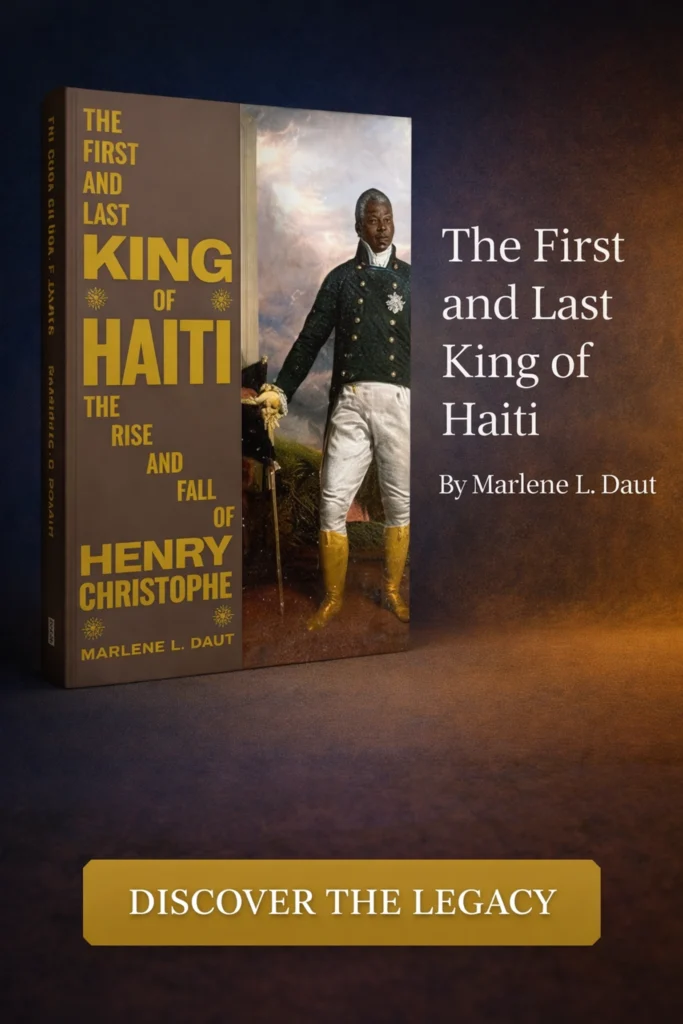
Haiti was the only nation where the enslaved rose up, defeated three European superpowers: France, Britain, and Spain: and declared themselves a sovereign republic.
This fact matters because it shatters the illusion of inherent European superiority.
It proves that the "primitive" was, in fact, the pioneer of universal human rights.
When Toussaint Louverture organized his army, he wasn't just fighting for territory.
He was fighting for the right to be recognized as human in a world that had sanctified his dehumanization.
The Internalized Plantation
The physical chains were broken in 1804, but the psychological architecture remained.
Decolonization is not an event; it is a grueling, lifelong process of excavation.
We have inherited a world that still operates on the remnants of colonial logic.
We see it in our beauty standards.
We see it in our educational systems.
We see it in the way we prioritize certain languages over our mother tongues.
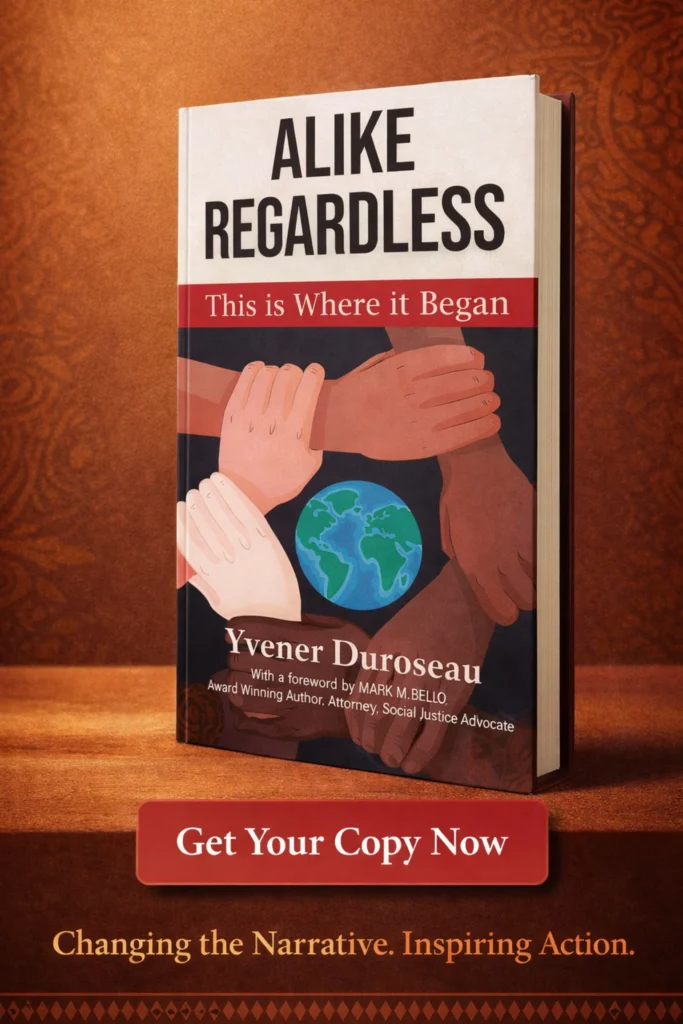
This is what I explore in my book, Alike Regardless: This Is Where It Began.
In that work, I examine the fundamental truth that despite the labels of race, class, and history, our shared humanity is the only absolute.
But to reach that humanity, we must first peel back the layers of historical trauma that have taught us to see each other as "other."
The "Decolonization of the Mind": a theme I am deeply committed to developing: requires us to look at the Haitian Revolution as a mirror.
It asks us: What are the Napoleon-sized myths still living in your head?
What are the plantations of thought that you have yet to burn down?

The Blueprint for Mental Liberation
Mental liberation requires a radical shift in how we process history.
We must stop viewing our past through the lens of our oppressors.
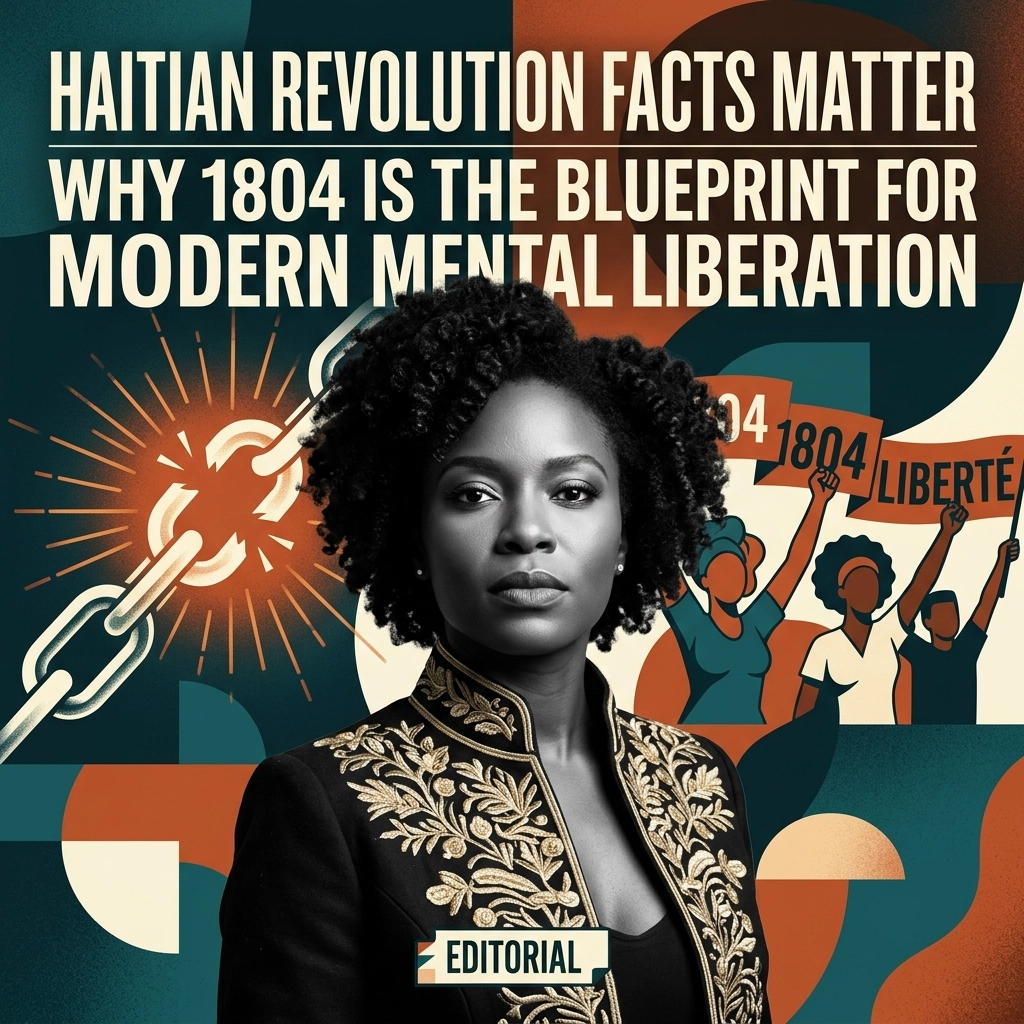
When we study 1804, we aren't just looking at the past; we are looking at a blueprint for the future.
The blueprint tells us that liberation begins with the rejection of the status quo.
The blueprint tells us that unity is the only defense against systemic erasure.
The blueprint tells us that our identity is not something to be granted by a state, but something to be declared by the self.
In the modern era, our battles are less about muskets and more about media.
They are about the algorithms that reinforce our biases.
They are about the textbooks that omit our triumphs.
They are about the "quiet urgency" of reclaiming a narrative that has been stolen, sold, and resold.
As Frantz Fanon once suggested, the decolonization process is the "veritable creation of new men."
It is not a restoration of what was, but a birth of what can be.
The Weight of Legacy
Haiti has paid a heavy price for its audacity.
The 1825 indemnity: the "independence debt" forced upon Haiti by France: was a ransom for a freedom already won.
It was a financial shackle intended to ensure that the mental liberation of 1804 never translated into economic prosperity.
But the spirit of 1804 cannot be liquidated.
It exists in every person who refuses to be defined by their circumstances.
It exists in the intellectual bravery of those who question inherited traditions.
It exists in the simple, revolutionary act of loving one's self in a world designed to make you hate your reflection.

We must learn to distinguish between the pain we feel and the identity we hold.
The colonial system taught us to equate our worth with our utility.
We were told we were valuable only if we were producing.
Mental liberation is the realization that your value is inherent.
You are not a tool.
You are not a demographic.
You are a miracle of resilience.
Conclusion: The Unfinished Revolution
1804 was a beginning, not an end.
The facts of the Haitian Revolution matter because they provide the evidence that change is possible.
They remind us that the "natural order" is often just a social construct waiting to be dismantled.
To move forward, we must be willing to engage in the uncomfortable work of decolonizing our internal landscapes.
We must read, we must reflect, and we must remember.
I invite you to join this conversation by exploring the foundations of our shared human story in Alike Regardless: This Is Where It Began.
The revolution of the mind is the only one that can never be reversed.
The courage to think for oneself.
The courage to speak one's truth.
The courage to be free.
The blueprint is already in your hands.
The fire is already in your soul.
Now, you must decide what to build.
Freedom is not a gift from the powerful; it is a reclamation of the self.
Haiti taught the world that lesson in 1804.
It is time we finally learned it.