Category: Religion & Belief Systems
Overview
This article explores the divergent yet connected paths of Haitian Vodou and Afro-Colombian spiritual traditions under the weight of colonial suppression. It examines how African-derived belief systems were transformed, fragmented, or structured as tools of resistance, ultimately arguing that colonialism did not erase spirituality: it merely forced it to find new ways to breathe.
Why do some African spiritual traditions survive as organized religions while others survive only as folklore?
Why is the drum a liturgical vessel in one land and a museum relic in another?
The transatlantic slave trade was more than a movement of bodies.
It was a movement of gods.
It was a movement of ancient, sophisticated ontological systems that were suddenly stripped of their geographic anchors.
When the African arrived in the Americas, they did not arrive with an empty mind.
They arrived with a map of the cosmos.
But the colonial project required that map to be burned.
Colonialism was an eraser.
It sought to smudge the lines of memory and replace the complex hierarchies of the Orisha and the Lwa with the singular, rigid image of a European Christ.
Yet, as we look across the diaspora today: from the mountains of Haiti to the riverbanks of the Colombian Chocó: we see that the eraser failed.
The ink was too deep.

The Haitian Blueprint: Faith as a State of Resistance
In Haiti, the preservation of African spirituality took a structured, almost defiant form.
Haitian Vodou is not a "fragment" of something else.
It is a complete, breathing system of law, medicine, and philosophy.
It survived because it had to.
In the French colony of Saint-Domingue, the Code Noir mandated the baptism of all enslaved people into the Catholic Church.
The colonizers intended for the cross to be a shackle.
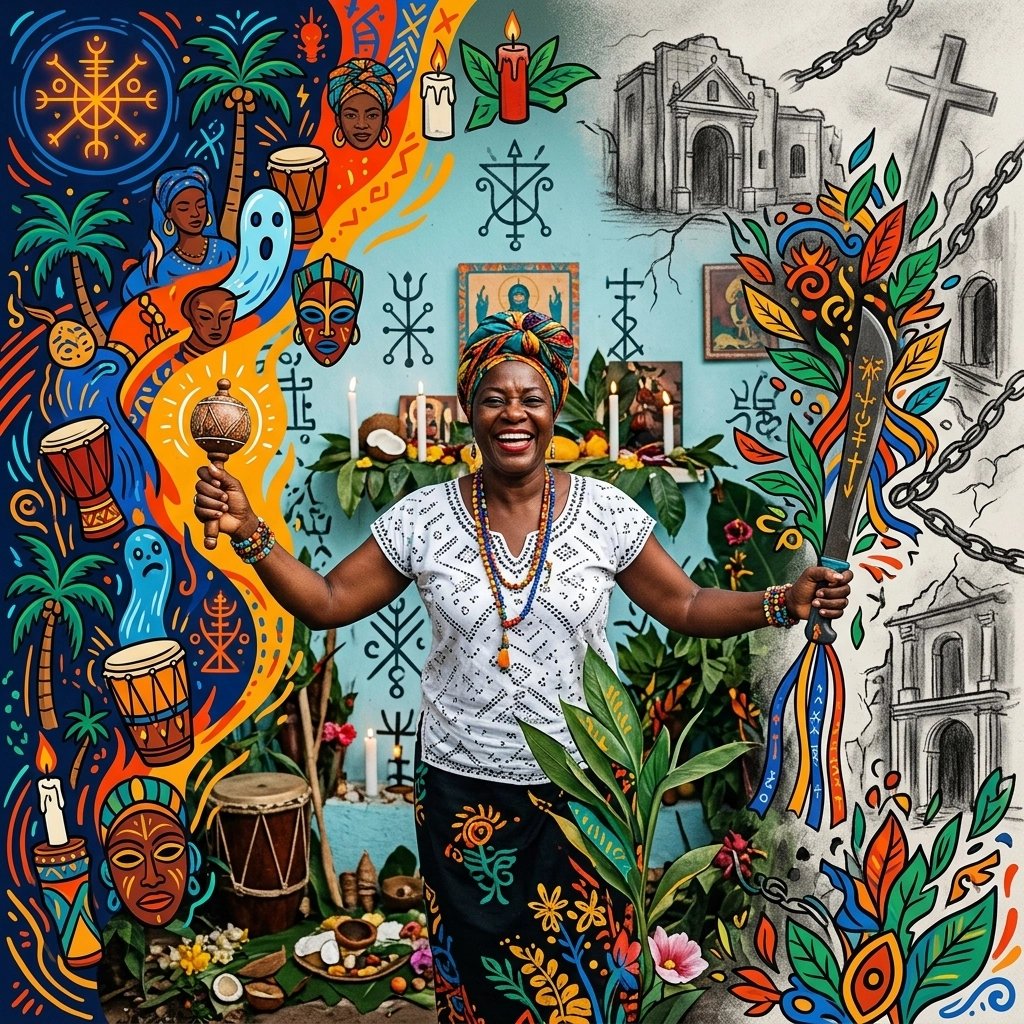
Instead, the enslaved people used it as a mask.
They saw the parallels between the Catholic saints and their own Lwa: the spirits of the Fon and Yoruba peoples.
St. Peter became Papa Legba, the guardian of the crossroads.
St. Patrick became Damballah, the great serpent creator.
This was not an abandonment of African faith; it was a sophisticated intellectual pivot.
It was a refusal to be spiritually invisible.
Vodou provided the organizational spine for the Haitian Revolution.
It was the ceremony at Bois Caïman that ignited the fire.
Because Vodou was centralized and structured, it became the cultural glue that held a diverse group of African ethnicities together.
It became the national identity.
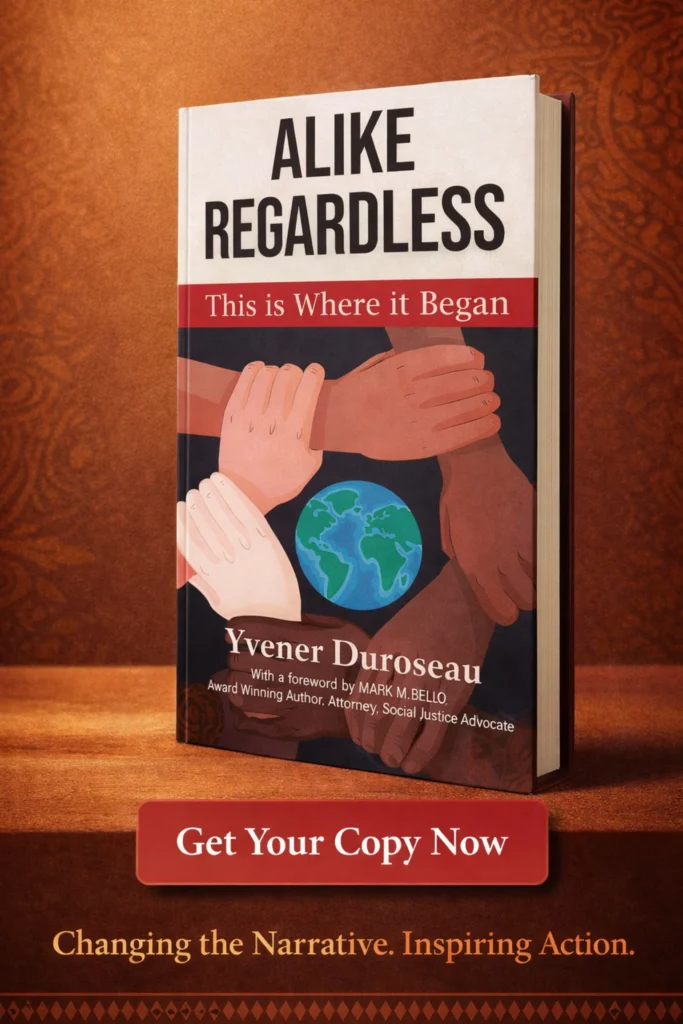
In my book, Alike Regardless: This Is Where It Began, I explore the ways in which our history and our narratives define our power.
Haiti’s power was its refusal to let its spirit be fragmented.
The Colombian Mirror: Survival in the Shadows
If Haiti is the example of spiritual structure, the Afro-Colombian experience is an example of spiritual adaptation and survival in the margins.
In Colombia, the presence of the African spirit is felt in the alabaos: the funerary chants of the Pacific coast.
It is felt in the ritualistic movements of the currulao.
It is found in the maroon communities of San Basilio de Palenque.
In Colombia, the colonial eraser was applied with a different kind of pressure.
The geography was vast, and the African population was often dispersed across river systems and dense jungles.
This led to a more fragmented preservation.
While Haitian Vodou evolved into a recognized, cohesive religion, Afro-Colombian spirituality often moved into the realm of "custom" or "magic."
The spirits did not disappear; they simply changed their names.
They became part of the land.
In the Chocó region, the boundaries between the Catholic liturgy and African ancestral veneration are blurred beyond recognition.
When the community sings to the saints, the rhythm is not European.
The cadence is not Roman.
The heart of the ceremony is African, even if the icons on the altar are Spanish.
This is the beauty of the "fractured" spirit.
It proves that the essence of a belief system can survive even when its formal structures are dismantled.

The Mechanics of the Colonial Eraser
Colonialism did not just steal labor; it attempted to monopolize Truth.
By promoting European Christianity as the only "civilized" way to reach the divine, colonial systems created a hierarchy of the soul.
African traditions were labeled as "superstition," "witchcraft," or "diabolical."
This was a psychological tactic.
If you can make a person ashamed of how they pray, you can make them ashamed of who they are.
The renaming of African practices was a form of spiritual violence.
To call a complex system of herbal medicine "sorcery" is to delegitimize thousands of years of scientific observation.
To call a sacred dance "heathenism" is to strip it of its communal and spiritual utility.
This forced conversion created a "dual consciousness."
The colonized subject learned to live in two worlds at once.
One world was public, performative, and Christian.
The other world was private, visceral, and African.
The colonizer saw the mask and assumed he had won.
But the spirit stayed alive behind the veil.
Preservation vs. Fragmentation: A Comparative Insight
When we compare Haiti and Colombia, we see two different survival strategies.
Haiti utilized a strategy of Preservation through Revolution.
The spirit was the catalyst for the state.
Colombia utilized a strategy of Preservation through Invisibility.
The spirit became the background noise of daily life.
In Haiti, the Lwa are distinct, named, and honored in formal temples.
In Afro-Colombian communities, the African essence is often woven into the very fabric of Catholic practice, surviving in the way a body moves or the way a spirit is invoked during a wake.
Both are valid.
Both are miracles of cultural resilience.
One is a fortress; the other is a river.
A fortress stands firm against the wind; a river simply flows around the obstacles in its path.

Decolonizing the Mind: Reclaiming the Altar
What does it mean to reclaim these identities today?
It starts with the Decolonization of the Mind.
We must stop viewing African-derived spiritual systems through the lens of colonial fear.
We must recognize that the "fragmentation" we see in our traditions is not a sign of weakness, but a scar of survival.
The courage to look back at our ancestors’ ways is the courage to heal.
The courage to honor the drum is the courage to reject the eraser.
We have been conditioned to believe that our spiritual history began with our baptism.
We have been taught that our "pagan" past is something to be buried.
But as I discuss in Alike Regardless: This Is Where It Began, the search for human unity requires us to look honestly at where we started.
We cannot achieve true unity if we are still hiding our spirits.
We cannot find peace if we are still ashamed of the rhythms that move our feet.

The Final Word
The colonial project tried to create a world where African spirituality was a ghost of the past.
Instead, it created a world where that spirituality is the pulse of the future.
Whether structured in a Haitian peristyle or whispered in a Colombian palenque, the spirit never left.
It adapted.
It masked itself.
It waited.
The question for us now is no longer how it survived.
The question is: now that we are awake, what will we do with the power it has preserved for us?
Will we continue to wear the mask, or will we finally let the spirit speak in its own tongue?
Suggested Reading:
If you want to dive deeper into the themes of identity, history, and the systems that shape our world, I invite you to read my book, Alike Regardless: This Is Where It Began. It is a journey into the heart of what connects us, beyond the erasers of history.