Category: Decolonization of the Mind
This post explores the urgent need to decolonize our geographical understanding, sparked by the 2026 Geneva Declaration on Reparative Justice and Robert Dussey’s call to action. We examine how the maps we use function as psychological constraints and how the revolutionary spirit of 1804 provides the blueprint for redrawing our world. By shifting from a cartography of control to a cartography of liberation, we reclaim not just territory, but our mental and symbolic sovereignty.
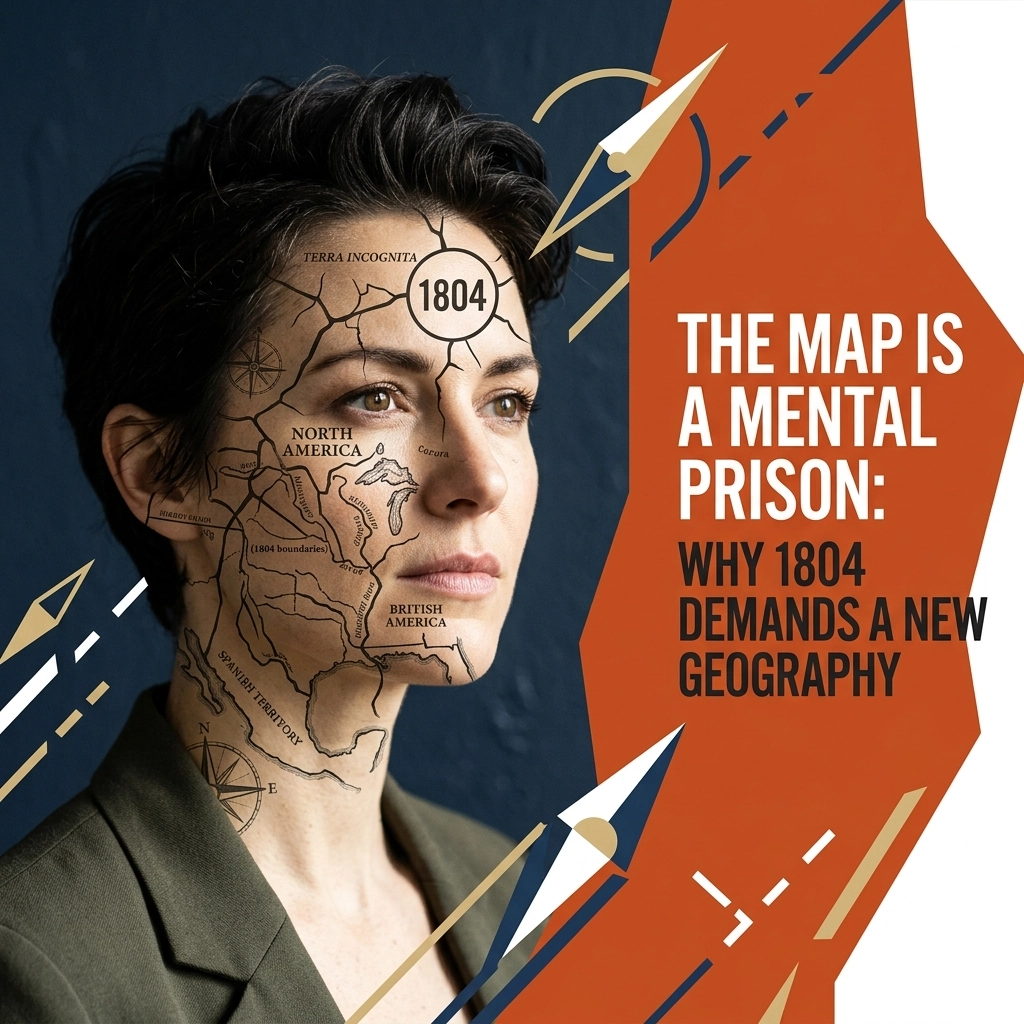
Look at the map on your wall.
It is lying to you.
Yesterday, on May 6, 2026, the world witnessed something radical in Geneva.
The Geneva Declaration on Reparative Justice wasn’t just about money or apologies.
It was about the truth of space.
Togo’s Foreign Minister, Robert Dussey, stood before the assembly and demanded we "decolonize geography."
He wasn't talking about moving borders.
He was talking about breaking out of a mental prison.
For centuries, we have been viewing the world through a lens designed to shrink us.
We have been socialized to see ourselves as smaller than we are.
This is not an accident.
This is cartographic warfare.
The Mercator Lie
Most of us grew up with the Mercator projection.
It makes Europe look massive.
It makes Greenland look larger than Africa.
In reality, Africa is fourteen times larger than Greenland.
You could fit the United States, China, India, and most of Europe inside the African continent, and you’d still have room for change.
But that’s not what the map tells your brain.
The map tells your brain that the Global North is the center of gravity.
The map tells your brain that the Global South is a peripheral footnote.
This is a mental prison.
When your physical reality is consistently minimized on the page, your internal sense of power follows suit.
We have internalized a geography of insignificance.

The 1804 Lens
In 1804, Haiti did something the world thought was impossible.
It wasn't just a military victory.
It was a refusal to be defined by a European system of reality.
The French had a map of "Saint-Domingue."
That map defined the land as a factory for sugar and the people as pieces of property.
When Dessalines and the revolutionaries tore up that map, they weren't just taking back the soil.
They were reclaiming the right to define space.
They renamed the land Ayiti.
They chose a name that honored the indigenous Taino people, reaching back before the colonial fracture.
1804 was the first great act of decolonizing geography.
It was the radical declaration that the map provided by the master is a tool of enslavement.
To be free, you must first burn the master's map.
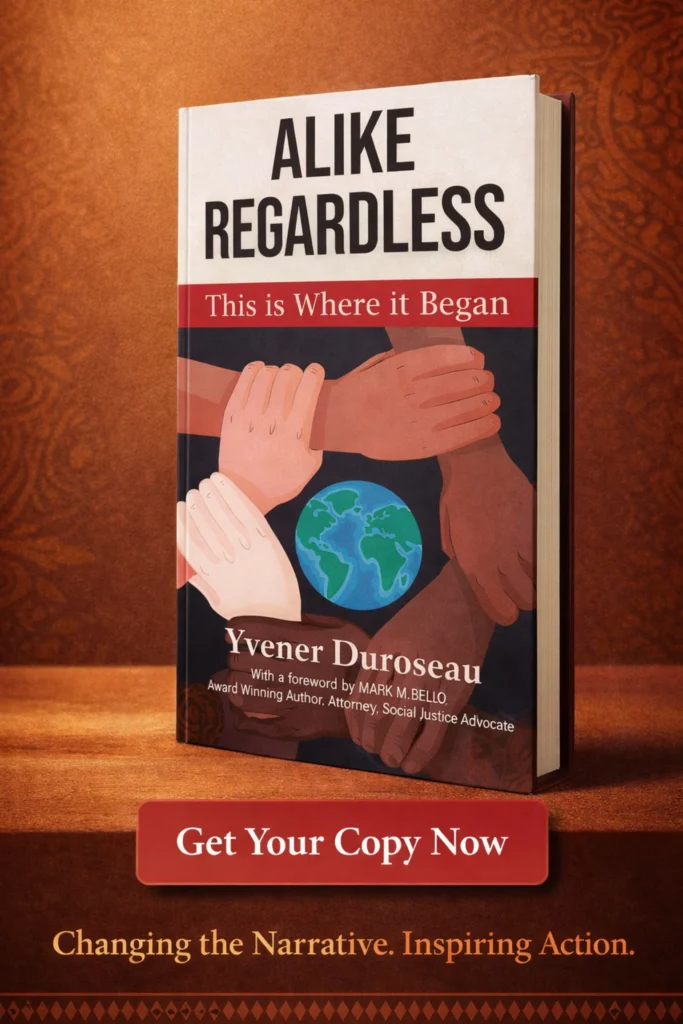
In my book, Alike Regardless: This Is Where It Began, I explore how these foundational shifts in identity and narrative shape who we are today.
If we don't understand where the lines were first drawn, we can never hope to erase them.
A Cartography of Liberation
Robert Dussey’s call in Geneva is a modern echo of the 1804 spirit.
He is calling for a "cartography of liberation."
If we don't fix the map, we don't fix the mindset.
Decolonization is not a metaphor.
It is a literal restoration of space.
The Geneva Declaration focuses on "systemic accountability."
But accountability is impossible as long as the tools we use to measure the world are biased.
How can we talk about reparations if the very ground we stand on is symbolically stolen?
Reparations are more than a check in the mail.
They are the restoration of our symbolic and literal space in the world.
We are not asking for a seat at their table anymore.
We are redrawing the table entirely.

The Psychological Fracture
Why does this matter to the average person in Brooklyn, Port-au-Prince, or Lomé?
Because the map lives in your psyche.
It informs your sense of what is possible.
When the geography of your ancestors is depicted as a tiny, fractured corner of the world, your ambitions become tiny and fractured.
We suffer from a spatial trauma.
We have been trained to look "up" to the North for validation, for technology, for "civilization."
We have been trained to look "down" at ourselves.
This is the "Decolonization of the Mind" in its most visceral form.
It is the act of looking at a map and seeing the truth.
The truth is that the Global South is the heart of the world.
The truth is that our resources, our cultures, and our people are the foundation of global prosperity.
The truth is that the "prison" has no locks, only illusions.
Redrawing the Future
The Geneva Declaration is a start.
But the real work happens in our schools, our media, and our homes.
We need to stop using the Mercator projection in our classrooms.
We need to start using the Gall-Peters projection or the AuthaGraph map.
We need to see the world in its true proportions.
But more than that, we need to see ourselves in our true proportions.
The spirit of 1804 demands that we stop asking for permission to exist.
Self-definition is the ultimate act of sovereignty.

We are living in a moment of great transition.
The old structures are crumbling under the weight of their own lies.
The "quiet urgency" of our time is the need to reclaim our narrative before the new maps are drawn by the same old hands.
We are no longer the "wretched of the earth."
We are the architects of a new geography.
If you want to dive deeper into how we reclaim our narrative from the ground up, I encourage you to read Alike Regardless: This Is Where It Began.
It’s about more than history; it’s about the psychology of our beginning.
The map is a mental prison only if you believe in the walls.
The walls are made of paper.
The fire of 1804 is still burning.
And it’s time to let it consume the old maps.
We are redrawing the world.
And this time, we are putting ourselves exactly where we belong.
At the center.
Unapologetic.
Immense.
Free.
To learn more about these themes and my upcoming work on the Decolonization of the Mind, visit yvenerduroseau.com.
You can find more reflections on history and power at yvenerduroseau.com/blogs.
The journey to liberation begins with the courage to see the world as it actually is.
The courage to see yourself as you actually are.
The courage to draw a new map.
Get your copy of Alike Regardless: This Is Where It Began and join the conversation.