Category: History & Narrative Power
Today, April 7, 2026, the air feels different.
The CARICOM Reparations Commission just wrapped up its media conference.
The tone wasn't one of pleading.
It wasn't a request for charity.
It was a presentation of an invoice.
Following the United Nations’ recent declaration that the transatlantic slave trade was the "gravest crime against humanity," the Caribbean is no longer speaking in metaphors.
We are speaking in math.
We are speaking in ledgers.
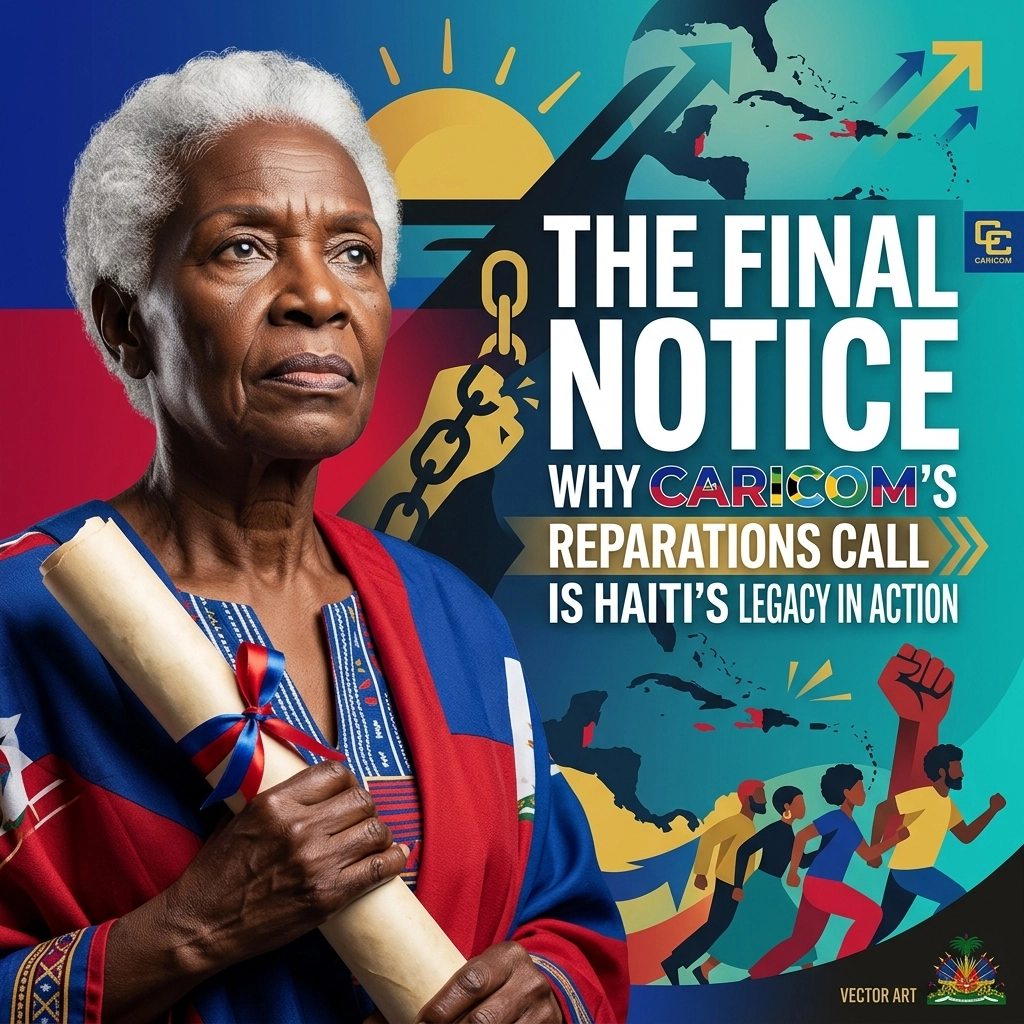
We are speaking in the language of a final notice.
For too long, the global North has treated reparations as a philosophical debate to be held in the hallowed halls of academia.
They have treated our history as a series of unfortunate events rather than a calculated, systemic extraction of life and wealth.
But today, the 1804 lens has been applied to the global stage.

The Price of Precedent
Haiti is the ghost that haunts every reparations discussion.
In 1804, Haiti did the unthinkable.
It broke the chains.
It defeated the might of Napoleon.
It declared that Black lives were not only human but sovereign.
And for that audacity, the world made Haiti pay.
Literally.
In 1825, France returned not with shackles of iron, but with shackles of paper.
They demanded 150 million francs: an "indemnity" for the loss of their "property."
That "property" was the ancestors of the people living on that land.
Haiti was forced to pay a ransom for its own independence.
A ransom that took over 122 years to settle.
A ransom that bled the nation dry while the rest of the world built their banks and their empires on the interest.
When CARICOM speaks today, they are echoing the 1804 legacy.
They are pointing out that the poverty of the Caribbean is not a failure of character, but a result of a robbery.
It is a "Double Debt."
First, the debt of stolen labor.
Second, the debt of forced payment for freedom.
We are done acting like the world did us a favor by "granting" us independence.
Independence was bought in blood and then taxed in gold.
The Performance of the Apology
We have entered the era of the performative apology.
Monarchs travel across the ocean to express "profound sorrow."
Prime Ministers offer "deep regret."
Institutions acknowledge their "historical ties" to the trade.
But an apology without repair is just a performance.
It is a theatrical production designed to quiet the conscience of the oppressor without changing the bank balance of the oppressed.
If you steal a car and say "sorry" while you’re still driving it, do you really regret the theft?
Structural redistribution is the only metric of sincerity.
The CARICOM commission made it clear today: we are not interested in the vocabulary of sorrow.
We are interested in the mechanics of justice.
This is about the Decolonization of the Mind.
It is about moving from the internalised identity of the "beggar" to the rightful identity of the "creditor."

The 1804 Renaissance
The "1804 Renaissance" is more than a historical callback.
It is a psychological shift.
It is the refusal to let those who wrote the laws to justify the crime be the same people who define the terms of the punishment.
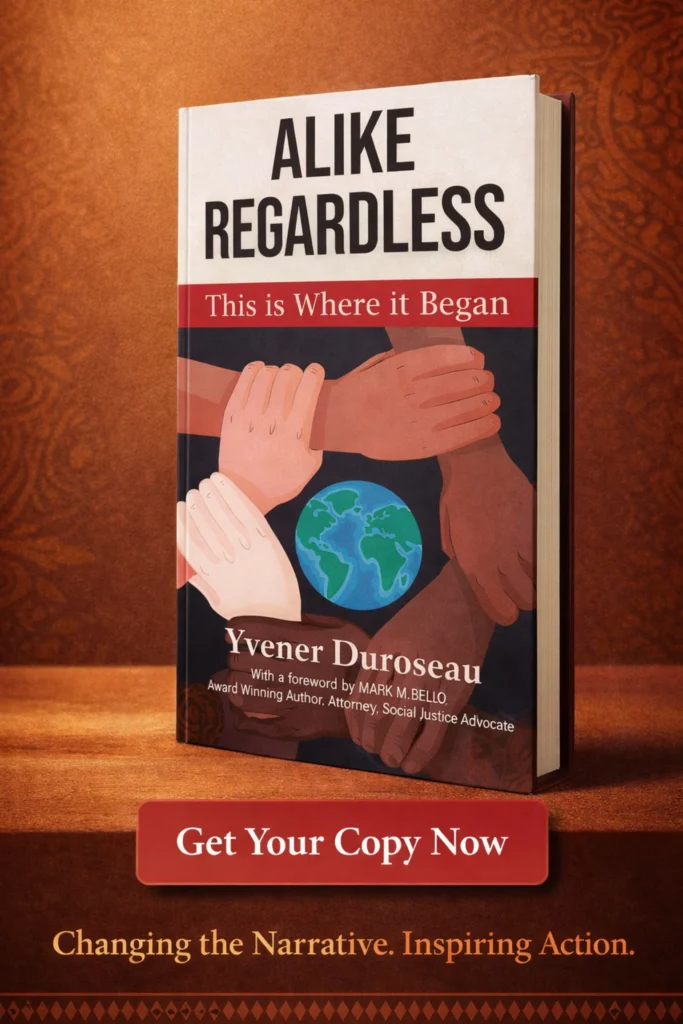
In my book, Alike Regardless: This Is Where It Began, I explore the roots of how we perceive our value and our history.
We have been conditioned to feel "less than" because of our economic standing.
We have been told that our "underdevelopment" is a sign of our inability to lead.
But when you look at the receipts, you realize we weren't "underdeveloped."
We were over-extracted.
The world’s wealth is a monument to the labor they didn’t pay for.
The global power systems were built on the broken backs of the Caribbean and the African continent.
As C.L.R. James wrote in The Black Jacobins: "The slave-trade and slavery were the economic basis of the French Revolution."
The very ideals of "Liberty, Equality, Fraternity" were funded by the denial of those same rights to the people of Haiti.
We are reclaiming that narrative.
We are pulling the veil back on the hypocrisy of the Enlightenment.
Decolonizing the Future
What does justice look like in 2026?
It looks like the cancellation of debts that were never legitimate.
It looks like the return of stolen wealth to build hospitals, schools, and infrastructure that were denied for centuries.
It looks like an honest accounting of how the "First World" became the "First."
It is not a "handout."
It is a repayment.
The Decolonization of the Mind requires us to stop asking for permission to be seen.
We are presenting the bill for centuries of stolen labor and life.
We are looking at the legal definitions and finding them wanting.
If the slave trade was the "gravest crime against humanity," then the proceeds of that crime are "tainted assets."
In any other legal system, the proceeds of a crime are seized and returned.
Why should the global economy be any different?

The Staccato of Justice
Stop.
Think.
The systems that rule us today were designed when we were considered cargo.
The laws were written to protect the investor, not the human.
The borders were drawn to facilitate extraction, not community.
We are living in the ruins of their greed.
But we are also the architects of our own liberation.
The 1804 lens teaches us that power concedes nothing without a demand.
Haiti didn't wait for a UN declaration.
They took their freedom.
CARICOM today is taking the next step.
They are demanding the return of what was stolen so we can build a future that isn't defined by our trauma.
This is the quiet urgency of our time.
It is a controlled, measured, but absolute demand for what is ours.
A New Chapter
We are no longer the victims in this story.
We are the protagonists.
We are the ones holding the ledger.
As we move forward, let us remember that the mind is the first territory that must be liberated.
If you believe you are a debtor, you will always act with shame.
If you realize you are a creditor, you will act with authority.
The CARICOM conference today was a display of that authority.
It was a reminder that Haiti’s legacy isn't just about a revolution in the past.
It is about the revolution that is happening right now in our consciousness.
We are presenting the final notice.
The world can no longer afford to ignore the debt.
Because we are no longer willing to pay it with our silence.
For those looking to understand where these fractures began and how we can begin to heal the collective psyche, I invite you to read Alike Regardless: This Is Where It Began.
It is time to look at the beginning so we can change the ending.
The bill is due.
And we are here to collect.

The Final Word:
Justice is not a gift.
It is a requirement.
The "1804 Renaissance" is here to ensure that the "gravest crime against humanity" receives the gravest response.
No more performances.
No more sorrow.
Just repair.

Learn more about our journey toward narrative power and collective healing by visiting our blog archives.