Category: Decolonization of the Mind
Overview
This post explores the invisible architecture of the colonial mentality and provides a strategic roadmap for achieving true mental liberation. By examining the enduring legacy of the Haitian Revolution and contemporary global power structures, we outline five actionable steps to reclaim your intellectual sovereignty and reshape your internal narrative.
When was the last time you had a thought that was truly your own?
It is a haunting question.
We like to believe we are the architects of our own opinions.
We believe our tastes, our values, and our ambitions are self-generated.
But for most of us, the "house" of our mind was built by someone else.
The floorboards were laid by colonial history.
The windows were framed by Western education.
The mirrors were tinted by a global hierarchy that ranks some cultures as "civilized" and others as "primitive."
To talk about the decolonization of the mind is to admit that our internal landscape is currently occupied territory.
It is a quiet occupation.
It doesn’t use soldiers; it uses textbooks.
It doesn’t use walls; it uses "standards of professionalism."
It doesn’t use chains; it uses a colonial mentality that makes us feel small for being who we are.
If we want to be free, we have to do more than just change the laws.
We have to change the lens.
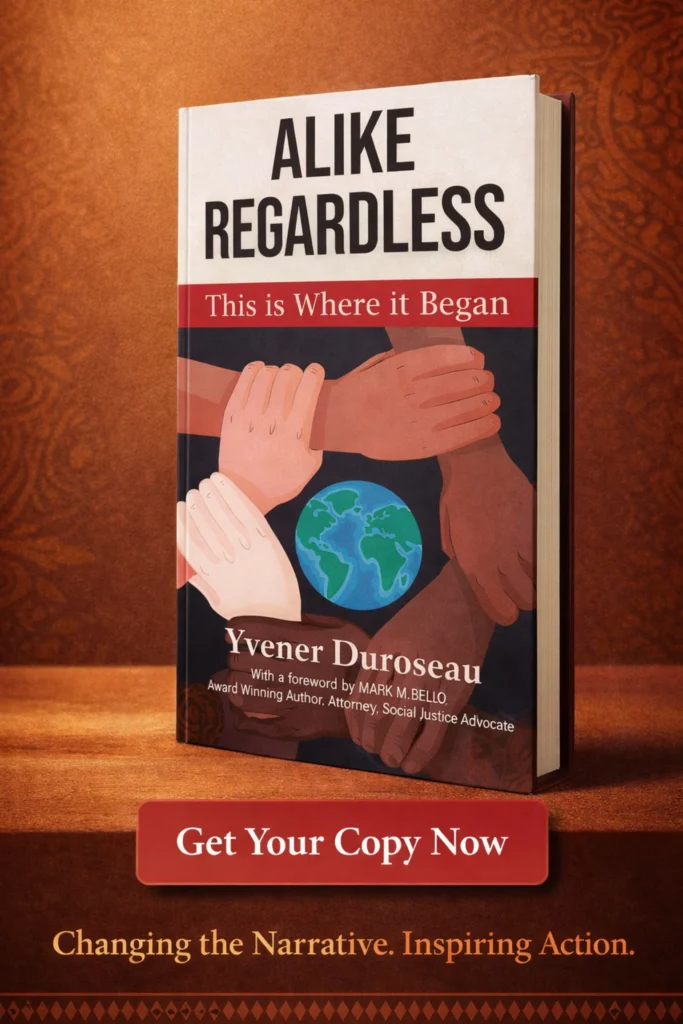
In my book, Alike Regardless: This Is Where It Began, I explore how our shared humanity is often obscured by these artificial divisions.
But before we can see our commonality, we must first see the structures that keep us fractured.
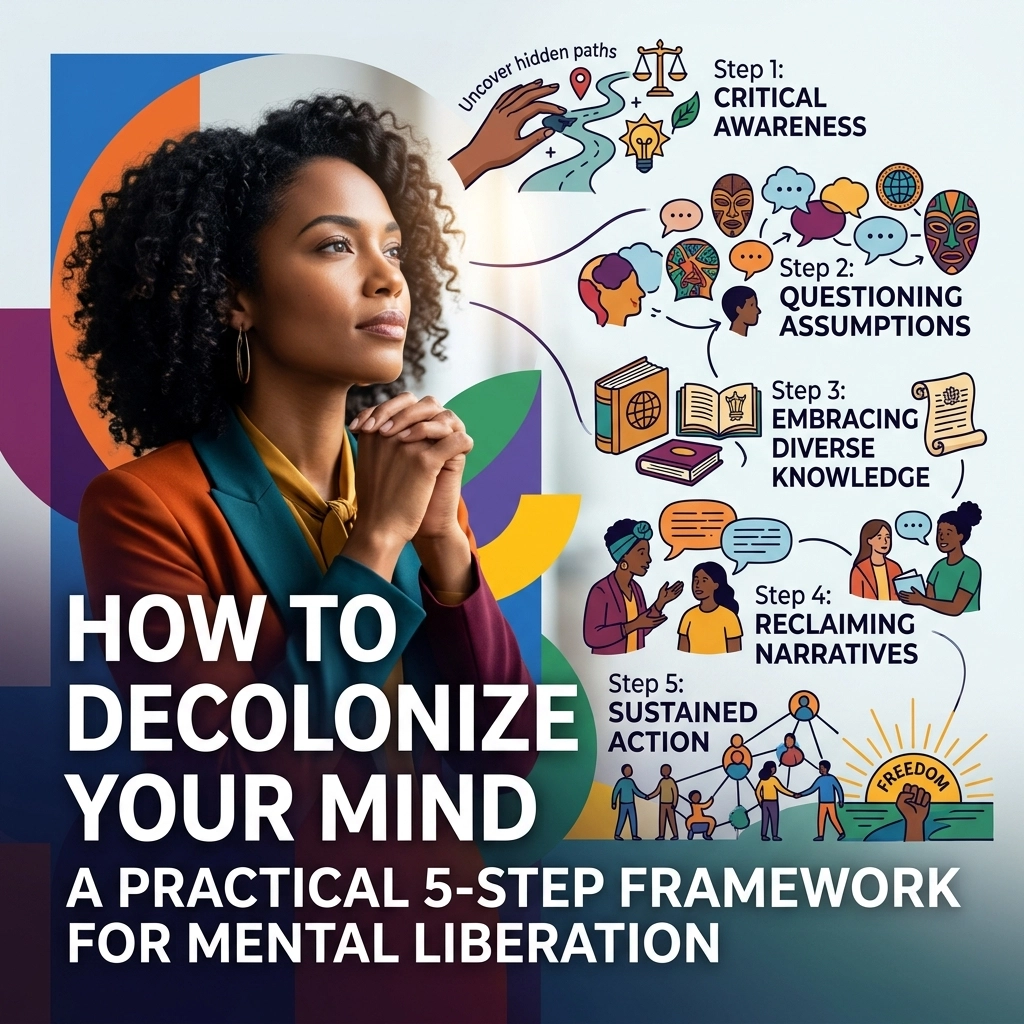
Here is a 5-step framework to begin the work of mental liberation.
Step 1: Audit the Internal Architecture
You cannot escape a prison you cannot see.
The first step is awareness.
You must become a detective in your own brain.
Look at what you consider "normal."
Look at what you consider "beautiful."
Look at what you consider "intelligent."
If your definition of "professional" only includes straight hair and European accents, you have a colonial squatter in your mind.
If your definition of "success" only involves accumulation and dominance, the occupation is deep.
We see this globally in the debate over reparations and looted art.
When museums in Europe refuse to return the Benin Bronzes, they argue they are "protecting" history.
But whose history?
And who defined them as the "protectors"?

This same dynamic happens internally.
We hold onto colonial ideas because we’ve been told they are the "standard."
We must audit these beliefs.
We must ask: Who told me this was true?
We must ask: Does this belief serve my liberation or my limitation?
The courage to look.
The courage to name the lie.
Step 2: Interrogate the "Universal"
We have been taught that Western history is "World History."
We have been taught that Western philosophy is "Human Thought."
Everything else is categorized as "ethnic" or "traditional."
This is a trick of language.
By making one perspective the "default," all other perspectives become "other."
Consider the haitian revolution facts that are often left out of mainstream history books.
In 1804, Haiti did the unthinkable.
Enslaved people didn’t just ask for freedom; they took it.
They defeated the greatest empires of the time: France, Britain, and Spain.
Yet, for centuries, the world tried to erase this victory.
They called it a "tragedy" or a "rebellion" rather than the birth of modern human rights.
The world feared Haiti because Haiti proved that the colonial hierarchy was a myth.
If you want to decolonize your mind, you must stop treating Western thought as the universal baseline.
Start seeking out the voices that were silenced.
Read the histories written by the "losers" of colonial wars.
Not to process pain, but to reclaim power.
Step 3: The Art of Unlearning
Decolonization is a surgical process.
It requires us to "delink" from the systems that tell us we are inferior.
This is where it gets uncomfortable.
Unlearning is harder than learning.
Learning adds a new floor to the building; unlearning requires you to tear down the foundation.
We have internalized the idea that we must "earn" the right to be treated as human.
We have internalized the idea that our worth is tied to our productivity.
These are colonial legacies designed to make us better workers, not better humans.
In Alike Regardless: This Is Where It Began, I argue that we must look back to the beginning to understand where the fracture started.
We must unlearn the habit of looking for external validation.

Stop trying to "fit in" to a system that was built to keep you out.
Stop trying to speak a language that was designed to silence your ancestors.
The goal is not to be a better version of what they want.
The goal is to be a version they never imagined.
Step 4: Reclaim the Narrative Power
Freedom is the ability to define yourself.
The colonial project succeeded because it stole our stories.
It took our gods and called them demons.
It took our languages and called them dialects.
It took our medicine and called it superstition.
To decolonize is to sanctify what was once mocked.
It is to look at the Haitian legacy not through the eyes of fear, but through the eyes of fire.
Haiti was the first nation to declare that no human being could be property.
That is a universal truth born from a specific struggle.
When you reclaim your narrative, you stop being a character in someone else's book.
You become the author.
Use the language of your ancestors.
Value the wisdom of your elders.
Trust the intuition that the system told you to ignore.
Identity is not a costume.
It is a compass.
Step 5: Practice Daily Liberation
Mental liberation is not a destination.
It is a practice.
The world is still colonial.
The systems of power have not moved.
The media we consume and the institutions we work for are still designed to reinforce the old hierarchies.
You must choose liberation every morning.
It is found in how you speak to your children.
It is found in how you spend your money.
It is found in the art you support and the books you read.
We move from the "I" to the "we."
Decolonization is not a solo sport.
It is a collective movement.
As we free our own minds, we create space for others to do the same.

We must support global movements for reparations, not just as a financial transaction, but as a moral alignment.
We must demand the return of stolen artifacts, not just for the sake of the objects, but for the sake of the souls they represent.
The mind is the final frontier.
The last territory to be reclaimed.
The Quiet Urgency of the Now
We live in a fractured world.
We feel the tension in our bodies.
We feel the weight of a history we didn't write.
But the chains are rusting.
The 1804 spirit is not a ghost; it is a heartbeat.
The work of the decolonization of the mind is the most important work of our generation.
It is the prerequisite for peace.
It is the foundation for human unity.
You are more than the labels they gave you.
You are more than the history they taught you.
The door is open.
The only thing left to do is walk through it.
If you are ready to explore the roots of this journey and how we might find common ground in a divided world, I invite you to read my book, Alike Regardless: This Is Where It Began.
It is time to come home to yourself.
Stay thoughtful. Stay liberated.
For more insights on mental liberation, history, and the power of narrative, visit www.yvenerduroseau.com or explore our other articles on the Yvener Duroseau Blog.