Category: Decolonization of the Mind
Overview
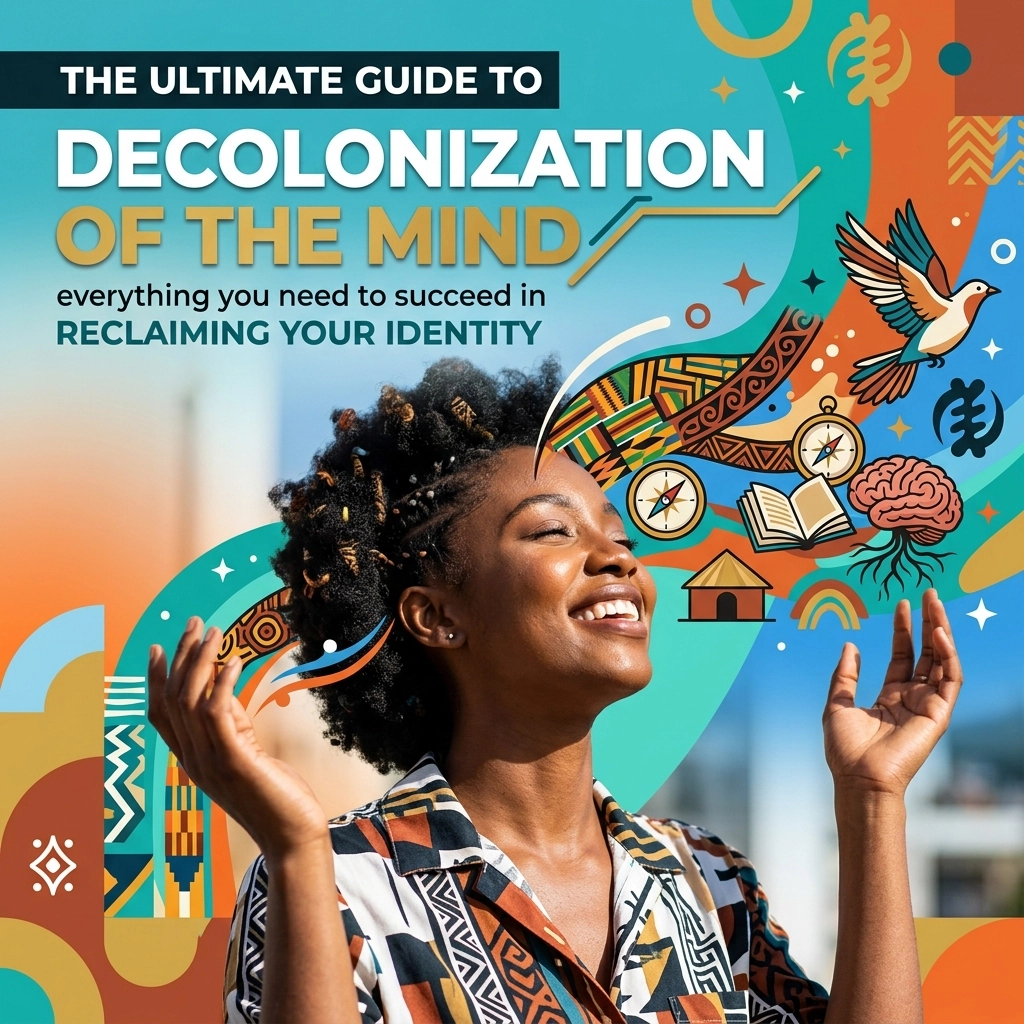
This guide explores the profound journey of mental liberation, moving beyond physical freedom to the reclamation of the psyche. By examining the intersections of Haitian revolutionary history, modern systemic power, and personal identity, we provide a roadmap for unlearning inherited colonial narratives and embracing an authentic self.
Have you ever stopped to wonder if your thoughts are truly your own?
Not the surface-level decisions about what to eat or what to wear, but the deep-seated convictions about what is beautiful, what is "civilized," and what constitutes success.
We live in a world where the physical chains of the past have been largely replaced by invisible scripts.
These scripts dictate how we view our history, how we use our language, and how we measure our worth.
This is the colonial mentality: a lingering shadow that survives long after the flags of empires have been lowered.
To reclaim your identity, you must first recognize that your mind has been a battlefield.
The Ghost in the Machine: Understanding Colonial Mentality
Colonization was never just about land.
It was about the landscape of the human spirit.
It was a systematic attempt to replace indigenous and African knowledge systems with a singular, Eurocentric "truth."
When we talk about the decolonization of the mind, we are talking about a radical act of psychological archaeology.
We are digging through layers of internalized inferiority and forced assimilation to find the artifacts of who we were always meant to be.
Consider the current global debates over reparations and looted art.
When a nation demands the return of its stolen artifacts from a museum in London or Paris, they aren't just asking for wood and bronze.
They are asking for their memory back.
They are demanding the return of their spiritual heritage.
We must do the same with our internal landscapes.

The Haitian Blueprint: Physical Liberty vs. Mental Sovereignty
Haiti remains the ultimate case study in the struggle for total liberation.
The Haitian Revolution facts are often sterilized in Western textbooks, yet they offer the most potent lessons in reclaiming identity.
In 1804, the enslaved people of Saint-Domingue didn't just defeat the greatest army of the time; they challenged the very definition of "human."
They broke the physical chains with a ferocity that shook the world.
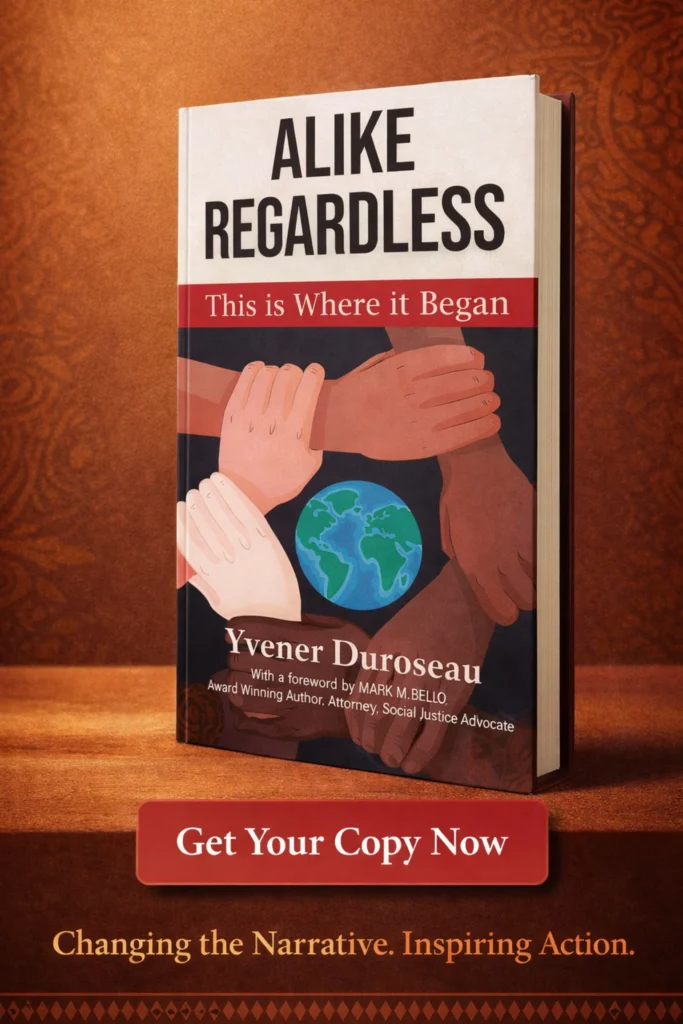
Yet, as Yvener Duroseau explores in his work Alike Regardless: This Is Where It Began, the aftermath of revolution reveals a different struggle.
The struggle to remain free in a world that demands you pay a "double debt" for your sovereignty.
The struggle to value your own tongue over the language of the master.
The courage to fight.
The courage to dream.
The courage to define oneself outside the gaze of the oppressor.
As Ngũgĩ wa Thiong'o famously wrote in Decolonising the Mind: The Politics of Language in African Literature: "Language, any language, has a dual character: it is both a means of communication and a carrier of culture."
When we prioritize the colonizer’s language as the only vehicle for intelligence, we inadvertently smuggle their culture into our most private thoughts.
The Fractured Mirror: Why We Struggle to See Ourselves
We have been conditioned to see ourselves through a fractured mirror.
We look for validation in the very systems that were designed to exclude us.
We sanctify the "professionalism" of the West while dismissing the wisdom of our ancestors as superstition.
This is not an accident.
It is a design.
The system survives by making you a stranger to yourself.
It tells you that to be modern is to be Western.
It tells you that to be successful is to assimilate.
But assimilation is just a polite word for erasure.
We see this in the way history is taught: or rather, the way it is omitted.
We are taught to memorize the dates of colonial "discoveries" but are left ignorant of the sophisticated social structures that existed long before the first ships arrived.
The decolonization of the mind requires us to be our own historians.

The Path to Reclaiming Your Identity
How do we begin the process of unlearning?
It starts with the "quiet urgency" of self-interrogation.
1. Scrutinize Your Inherited Beliefs
Ask yourself: Why do I believe this is "proper"? Who taught me that this feature of mine is a flaw?
2. Reclaim the Language of the Body
We often treat our bodies as objects to be managed rather than vessels of history. Decolonization means listening to the trauma and the strength stored in our marrow.
3. Engage with Authentic Narratives
Seek out the voices that were silenced. Read the histories written by the conquered, not the conquerors. In Alike Regardless: This Is Where It Began, the focus is on the shared human thread that exists beneath these constructed divisions.
4. Practice Intellectual Bravery
It is easy to follow the crowd. It is difficult to stand in the truth of your own heritage when the world tells you it is irrelevant.
The courage to unlearn.
The courage to relearn.
The courage to be.
The Modern Reflection: Reparations of the Soul
We often talk about reparations in financial terms: checks and balances for centuries of unpaid labor.
But there is a reparation of the soul that no government can grant.
This is the debt you owe to yourself.
It is the act of returning to yourself the dignity that was stolen through normalized propaganda.
We see the power of this movement in the way young people are reclaiming their natural hair, their indigenous names, and their traditional faiths.
They are refusing to be "internalized" by a system that never loved them.
They are realizing that the "global power systems" are only powerful as long as we consent to their definitions of reality.

A Conclusion of Quiet Urgency
Decolonization is not a destination.
It is a constant, rhythmic pulse of awareness.
It is the refusal to let your mind be a colony for someone else’s ideas.
We are living in a time of great shifting.
The old structures are crumbling, but the new ones must be built on the foundation of authentic identity, not reconstructed colonial models.
You cannot build a house of freedom using the tools of the prison-keeper.
The journey begins with a single question: Who am I when no one is watching?
To find the answer, you must be willing to lose the person you were taught to be.
You must be willing to embrace the "fractured" pieces and turn them into a mosaic of your own making.
This is the work of a lifetime.
This is the work of a revolutionary.
Start today by reclaiming one thought.
Then another.
Then your whole self.
For more insights into the journey of human unity and the dismantling of the walls we’ve built between us, I encourage you to read Alike Regardless: This Is Where It Began. It is a necessary companion for anyone seeking to understand the origins of our current state and the path toward a more honest future.
Purchase your copy here: https://amzn.to/3Pymzyj
The mind is the final frontier of freedom.
Guard it well.
Reclaim it now.
To stay updated on these weekly explorations of history and identity, visit www.yvenerduroseau.com or browse more thoughts at www.yvenerduroseau.com/blogs.